The problem
On large construction programmes the schedule lives in Primavera P6, and the questions that matter are always the same: are we behind, where is the float going, and which contractor is slipping. Answering them usually means exporting the schedule, rebuilding curves in a spreadsheet and hoping nobody changed the baseline in the meantime. It takes a specialist, and it takes days.
What we built
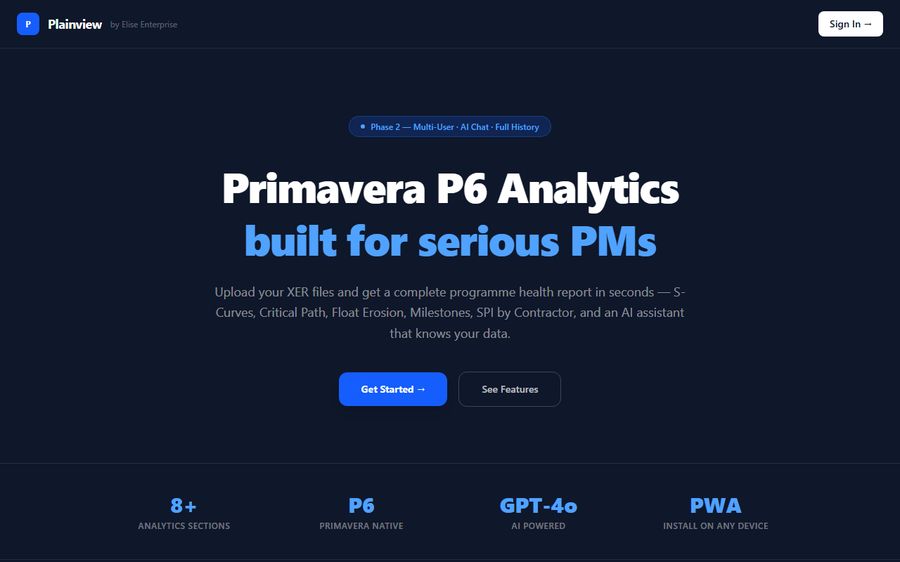
PlainView reads the XER file P6 already produces, so there is nothing new to configure. From that single upload it produces the analysis a project controls team would otherwise assemble by hand:
- S-curve analysis: baseline against actual against forecast
- Critical path and the activities driving it
- Float erosion, so shrinking contingency is visible before it runs out
- Milestone tracking against plan
- SPI by contractor, showing exactly who is ahead and who is behind
- An AI assistant built on GPT-4o that answers questions about the uploaded schedule in plain language
It installs as a progressive web app, so site teams can use it like a native app on any device. The second phase added multiple users, AI chat and full history across uploads.
Why it matters
The value is speed and access. A project manager gets a health report in seconds rather than waiting on a specialist, and the AI assistant means someone who does not live in P6 can still ask “why did the finish date move?” and get a grounded answer.
How it runs
PlainView runs on infrastructure we manage, behind the same reverse proxy that serves our own products, with automatic HTTPS and managed deployments.